
Key takeaway: Hypertrophic cardiomyopathy (HCM) is the most common heart muscle disease in cats, where the walls of the left ventricle thicken and the heart cannot fill and relax normally. The murmur of HCM is often the first clue a veterinarian hears, but a murmur alone does not confirm it, so imaging of the heart is needed. HCM is managed, not cured, with long-term monitoring and a care plan your veterinarian designs for your individual cat.
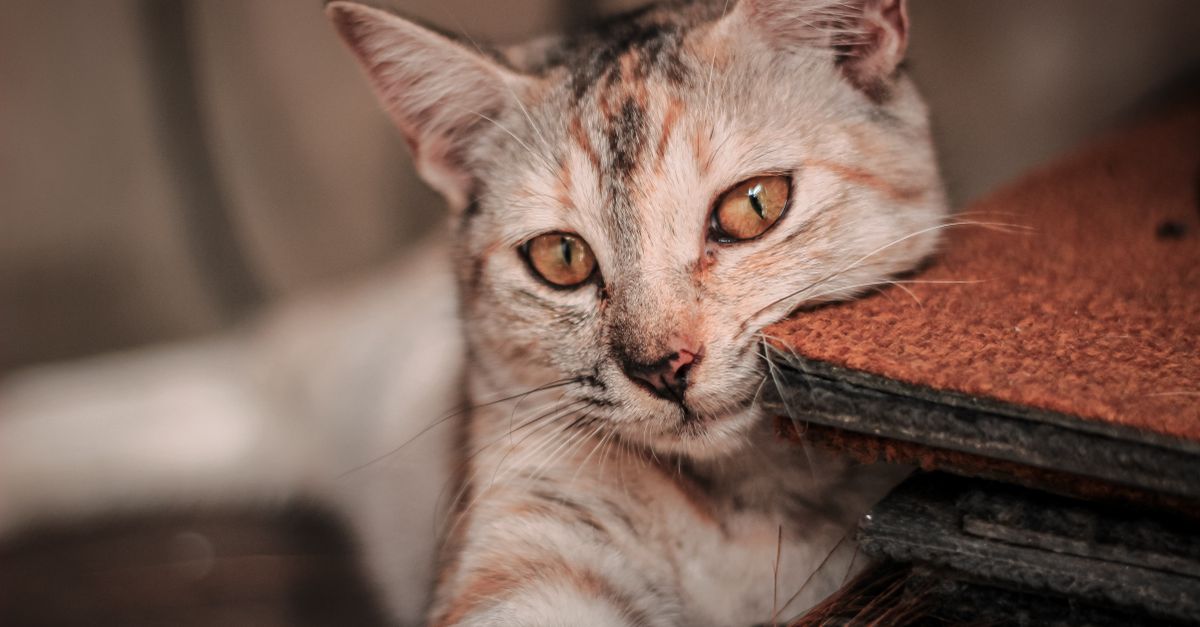
A cat resting comfortably at home.
What is hypertrophic cardiomyopathy (HCM) in cats?
Hypertrophic cardiomyopathy in cats is a disease where the muscular wall of the heart's main pumping chamber (the left ventricle) becomes abnormally thick. This thickening makes the chamber stiffer, so it cannot relax and fill with blood the way a healthy heart does.
HCM is the most commonly diagnosed heart disease in cats. It can appear in cats of many ages and breeds, from young adults to seniors.
Because the heart has to work against a stiffer, thicker muscle, blood flow can become turbulent and pressure can build up over time. This is why some cats develop a murmur, an abnormal rhythm, or signs of heart strain.
This article is about cats. Dogs can develop heart disease too, but HCM as described here is primarily a feline condition, and the murmur causes in dogs are different.
If your cat has been given a diagnosis of HCM or a suspected heart change, your veterinarian is the right person to explain what it means for your individual cat.
What is the murmur of HCM and what does it sound like?
The murmur of HCM is an extra whooshing sound a veterinarian hears through a stethoscope, caused by turbulent blood flow in a heart affected by hypertrophic cardiomyopathy. It is often heard over the left or lower chest, and in some cats it comes and goes with excitement, stress, or heart rate.
A murmur is a sign, not a diagnosis. It tells the veterinarian that blood is moving in a way that is not perfectly smooth, which is a reason to look closer at the heart.
Not every cat with HCM has a murmur, and not every cat with a murmur has HCM. Some cats have a soft murmur with a structurally normal heart, while others have serious heart changes with no murmur at all.
In cats, veterinarians may also hear a gallop sound (an extra heartbeat) or an irregular rhythm, which can be more concerning than a soft murmur.
If your veterinarian hears a murmur in your cat, it is worth a calm conversation about next steps. You can read more about what these sounds mean in our guide to heart murmur in cats.
What are the early and late signs of HCM in cats?
Early HCM in cats often has no visible signs at all, which is why it is sometimes found by accident during a routine checkup. As the disease progresses, signs can include faster or harder breathing, reduced activity, hiding, or in serious cases sudden distress.
Cats are very good at hiding illness, so owners may not notice anything until the heart is under significant strain. This is one reason regular veterinary checkups matter, especially for senior cats.
Here is a general comparison of what owners and veterinarians may notice at different stages. Every cat is different, so use this only as a conversation starter with your veterinarian.
| Stage | What owners may notice | What the vet may find |
| Early / subclinical | Often nothing | A murmur, gallop sound, or irregular rhythm on exam |
| Progressing | Less play, more rest, subtle breathing changes | Changes on heart imaging, possible rhythm changes |
| Advanced | Fast or labored breathing, open-mouth breathing, weakness, sudden hind-limb pain | Signs of heart failure or a blood clot on exam and imaging |
Signs that need urgent veterinary attention in cats
- Fast, heavy, or open-mouth breathing in a resting cat
- Sudden weakness or pain in the back legs
- Collapse or fainting
- Blue or pale gums
Any of these signs in a cat is an emergency. Contact your veterinarian or an emergency clinic right away.
How do vets diagnose HCM in cats?
Veterinarians diagnose HCM in cats mainly with an echocardiogram, an ultrasound of the heart that measures the thickness of the heart walls and how well the chambers fill and pump. A murmur or abnormal rhythm on physical exam is often what prompts this imaging.
An echocardiogram is the key test because it lets the veterinarian actually see the heart muscle. Other heart diseases and causes of thickening need to be ruled out, because treating the heart muscle without the full picture can be misleading.
Your veterinarian may use several tools together to understand your cat's heart:
- Physical exam and listening: Checking for a murmur, gallop, irregular rhythm, and breathing effort.
- Echocardiogram (heart ultrasound): The main way to confirm HCM and measure wall thickness.
- Blood pressure measurement: High blood pressure can thicken the heart wall and needs to be identified.
- Blood tests: Including thyroid testing in older cats, because an overactive thyroid can affect the heart.
- Chest X-rays: To look for fluid around or in the lungs if heart failure is a concern.
- ECG (electrocardiogram): To study the heart's rhythm if an irregular beat is heard.
Blood pressure matters because feline high blood pressure can both come from and contribute to heart and kidney problems. Our article on high blood pressure in cats with kidney disease explains how these systems connect.
Only a veterinarian can diagnose HCM and tell true HCM apart from other causes of heart thickening. If a murmur is found, ask your veterinarian whether an echocardiogram is the right next step.
Why does a murmur in a cat need more than one test?
A murmur in a cat needs more than one test because the murmur alone cannot tell the veterinarian whether the heart muscle is normal, mildly affected, or seriously diseased. Two cats with the same loudness of murmur can have very different hearts on imaging.
In cats, the loudness of a murmur does not reliably match the severity of disease. A quiet murmur can hide significant HCM, and a loud murmur can occur with a structurally normal heart.
This is different from some murmurs in dogs, where grade and cause often line up more predictably. You can compare the two in our overview of heart murmur grades, causes and care in dogs.
Because of this uncertainty, imaging and sometimes blood tests give your veterinarian the real answer. Talk to your veterinarian about which tests make sense for your cat's age and risk.
How is HCM in cats managed long term?
HCM in cats is managed, not cured, with a long-term plan that focuses on supporting the heart, watching for complications, and keeping your cat comfortable. There is no cure for HCM, so the goal is steady monitoring and care tailored to your individual cat by your veterinarian.
Management looks different for every cat and depends on the stage of disease. A cat with early, silent HCM may simply need periodic rechecks, while a cat with heart strain may need prescription medicines decided by the veterinarian.
Long-term management in cats often includes:
- Regular rechecks with your veterinarian, including repeat heart imaging as advised.
- Resting breathing rate monitoring at home, which many owners track while their cat sleeps.
- Blood pressure and bloodwork checks, especially in senior cats.
- Prescription medicines when the veterinarian decides they are appropriate for the stage and type of heart disease.
- A calm, low-stress home, since stress and overheating can be harder on a strained heart.
Senior cats often carry more than one condition at once, such as kidney disease alongside heart changes. Our guide to managing feline kidney disease at home can help if your cat is juggling several needs.
Where does HeartRx fit in?
HeartRx is a prescription heart medicine (pimobendan) that your veterinarian may prescribe. It is prescription only, which means your veterinarian decides whether it is appropriate for your cat, and how it is used.
Pimobendan is used in certain heart conditions, and whether it fits a particular cat depends entirely on the veterinarian's assessment of the heart. It is not a supplement and is not something to start on your own.
If you would like background on this medicine, you can read what owners should know about HeartRx (pimobendan), and then discuss with your veterinarian whether it has any role for your cat.
For any heart medicine, your veterinarian is the only person who should decide if, when, and how it is given to your cat.
How can I monitor my cat's heart at home?
You can monitor your cat's heart at home mainly by counting the resting or sleeping breathing rate, which is the number of breaths your cat takes in one minute while calm and asleep. A rising trend in this number can be an early warning that the heart needs attention.
To track resting breathing rate:
- Wait until your cat is sleeping or resting quietly, not purring or dreaming.
- Count each full breath (chest up and down counts as one) for 60 seconds.
- Note the number, and record it a few times a week.
- Share the trend with your veterinarian, and contact them if the number climbs or if breathing looks labored.
Alongside breathing rate, watch for changes in appetite, energy, hiding, and weight. These everyday observations give your veterinarian valuable clues between visits.
Ask your veterinarian what resting breathing rate range is right for your individual cat, and when to call. Home monitoring supports your vet's care plan, it does not replace it.
FAQ
What does the murmur of HCM sound like in a cat?
The murmur of HCM is an extra whooshing sound caused by turbulent blood flow, often heard over the left or lower chest, and it may come and go with your cat's heart rate or stress level. A murmur is a reason to investigate, not a diagnosis on its own, so your veterinarian will usually recommend a heart ultrasound.
Can HCM in cats be managed?
Yes, HCM in cats can be managed, though it cannot be cured. Management centers on regular veterinary monitoring, home breathing-rate checks, and prescription medicines when your veterinarian decides they are appropriate for your cat's stage of disease.
Does every cat with a heart murmur have HCM?
No. Many cats have a murmur with a structurally normal heart, and some cats with serious HCM have no murmur at all. Because a murmur's loudness does not reliably match disease severity in cats, your veterinarian may recommend an echocardiogram to see what is really happening.
Is HeartRx a supplement I can buy for my cat?
No. HeartRx is a prescription heart medicine (pimobendan) that your veterinarian may prescribe, not a supplement. Your veterinarian decides whether it is appropriate for your cat and how it is used.
How often should a cat with HCM see the vet?
The right schedule depends on the stage of disease and is set by your veterinarian. Cats with early, silent HCM may need periodic rechecks, while cats with heart strain may need closer follow-up, repeat imaging, and home breathing-rate monitoring between visits.
If your cat has a murmur or a diagnosis of HCM, you do not have to navigate it alone. Learn more about heart care options and feline health support, then talk with the RX Sciences team or your own veterinarian about the plan that fits your cat best. With steady monitoring and your veterinarian at the center of every decision, many cats with HCM live comfortable, well-supported lives.